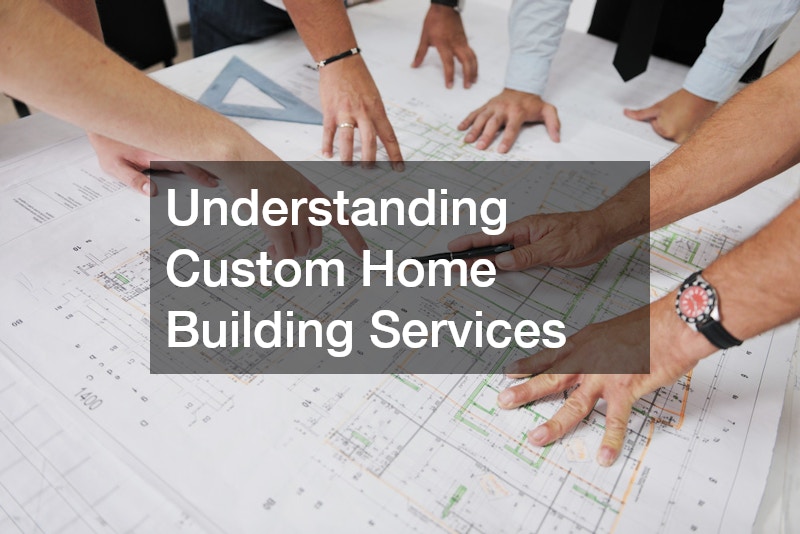
The journey to homeownership often leads to a crossroads: choosing between a pre-existing house and the opportunity to build something entirely new. While the former offers convenience, the latter provides the ultimate expression of personal style and functional requirements. For those who refuse to compromise on their vision, custom home building services offer a comprehensive pathway to turning a conceptual dream into a physical reality. This process is significantly more involved than purchasing a production home, requiring a deep partnership between the homeowner, architects, and builders to ensure every square inch of the property serves a purpose.
The Philosophy of Customization
A custom home is fundamentally different from a speculative or “tract” home. In traditional developments, a builder chooses a handful of floor plans and finishes, repeating them across a neighborhood to achieve economies of scale.
In contrast, custom building starts with a blank slate. The process is driven by the unique topography of the land, the lifestyle of the inhabitants, and a specific aesthetic language that reflects the owner’s personality.
Whether it is a kitchen designed for professional-grade catering, a basement outfitted with a high-end recording studio, or a floor plan optimized for multi-generational living, the flexibility of custom home building services ensures that the structure adapts to the person, rather than the person adapting to the structure. This level of intentionality is why many see custom building not just as a real estate transaction, but as a long-term investment in quality of life.
Phase 1: Pre-Construction and Design
The first stage of any custom project is often the most critical. It involves site selection, architectural drafting, and feasibility studies. A common misconception is that the builder only shows up once the blueprints are finished. However, the most successful projects involve the builder early in the design phase. This “design-build” approach allows for real-time cost estimation, ensuring that the architect’s creative vision stays within the client’s actual budget.
During this phase, the team evaluates the land for soil quality, drainage, and utility access. They also consider the “siting” of the home—how the sun hits the windows at different times of day and how the natural landscape can be preserved to enhance curb appeal. Once the site is vetted, the architectural team translates the client’s wish list into technical drawings, navigating the complex web of local zoning laws and building codes.
Phase 2: The Collaboration with Professionals
Building a custom home is a team sport. It requires a symphony of experts, including structural engineers, interior designers, landscape architects, and various skilled tradespeople. Central to this group is the general contractor or project manager. Their role is to act as the primary point of communication and the steward of the timeline.
Because every element of the home is bespoke, the selection of materials is vast. Homeowners are tasked with choosing everything from the foundation type and framing materials to the specific brand of smart-home integration. This can be overwhelming, which is why top-tier custom home building services often include design consultations. These experts help narrow down choices, ensuring that the marble countertops in the kitchen don’t clash with the hardwood flooring in the dining room, and that all materials meet the necessary durability standards for the local climate.
Phase 3: The Construction Process
Once the permits are secured and the ground is broken, the project moves into the vertical phase. This starts with the foundation and framing—the “bones” of the house. Unlike production homes that are built for speed, custom homes are often built for longevity and high performance. This might include advanced insulation techniques, superior weatherproofing, and reinforced structural components that exceed minimum code requirements.
As the walls go up, the “rough-in” phase begins. This is when the plumbing, electrical, and HVAC systems are installed. In a custom home, these systems are often far more complex. A client might request a radiant floor heating system, a sophisticated whole-home air filtration unit, or a complex lighting grid that can be controlled via a smartphone. The ability to integrate these high-tech features seamlessly into the architecture is a hallmark of modern craftsmanship.
Quality Control and Finishing Touches
The final stages of construction involve “closing in” the house with drywall, followed by the meticulous work of finish carpentry, painting, and fixture installation. This is where the artistry of the builder truly shines. Custom cabinetry, intricate crown molding, and hand-laid tile work are the details that distinguish a luxury custom home from a standard build.
Throughout this entire timeline, quality control is paramount. A reputable builder will conduct frequent inspections and invite the homeowner to “walk-throughs” at various milestones. These meetings are essential for catching minor issues before they become permanent fixtures. The goal is to ensure that when the keys are finally handed over, the home is a perfect reflection of the initial design documents.
Ultimately, choosing to build a custom home is about taking control of your environment. It is an intricate process that demands patience, communication, and a clear vision. By partnering with the right professionals, you can navigate the complexities of construction and emerge with a sanctuary that will serve your family for generations to come.
Related Posts

What First-Time Property Owners Should Know Before Building
Building a home for the first time is an exciting milestone filled with possibilities and important decisions. For many, it…

Hiring a Plumbing Company for Emergency Repairs
This article provides essential information on hiring a plumbing company for emergency repairs, focusing on key considerations and frequently asked…

How to Approach Landscape Design
Landscape design is not just about beautifying your outdoor spaces; it’s a blend of art and science aimed at creating…